Expanding Access to Geoscience:
How GEOPaths is Transforming STEM Pathways at Fort Valley State University
How GEOPaths is Transforming STEM Pathways at Fort Valley State University
By NABG
Meeting the unprecedented scientific challenges of the present and future—especially in geoscience—requires more than incremental change. It demands transformational shifts at personal, institutional, and national levels to expand access and opportunity for underrepresented students.
For small, rural, minority-serving institutions, preparing students for twenty-first century STEM careers presents both challenges and powerful opportunities.
At Fort Valley State University (FVSU), a historically Black university located in middle Georgia, those opportunities are becoming reality. Through innovative partnerships and visionary leadership, FVSU has built a thriving geoscience pathway that is opening doors for students who may never have considered the field.
Building a Pathway to Geoscience
Over the past decade, Dr. Aditya Kar – Professor of Geosciences at FVSU, GSA Bromery Award Winner, and NABG Empowering Excellence Award Winner – developed an informal partnership with the EarthScope Consortium, supported by the National Science Foundation (NSF). Each year, at least one FVSU student was selected for EarthScope’s competitive summer internship in seismology.
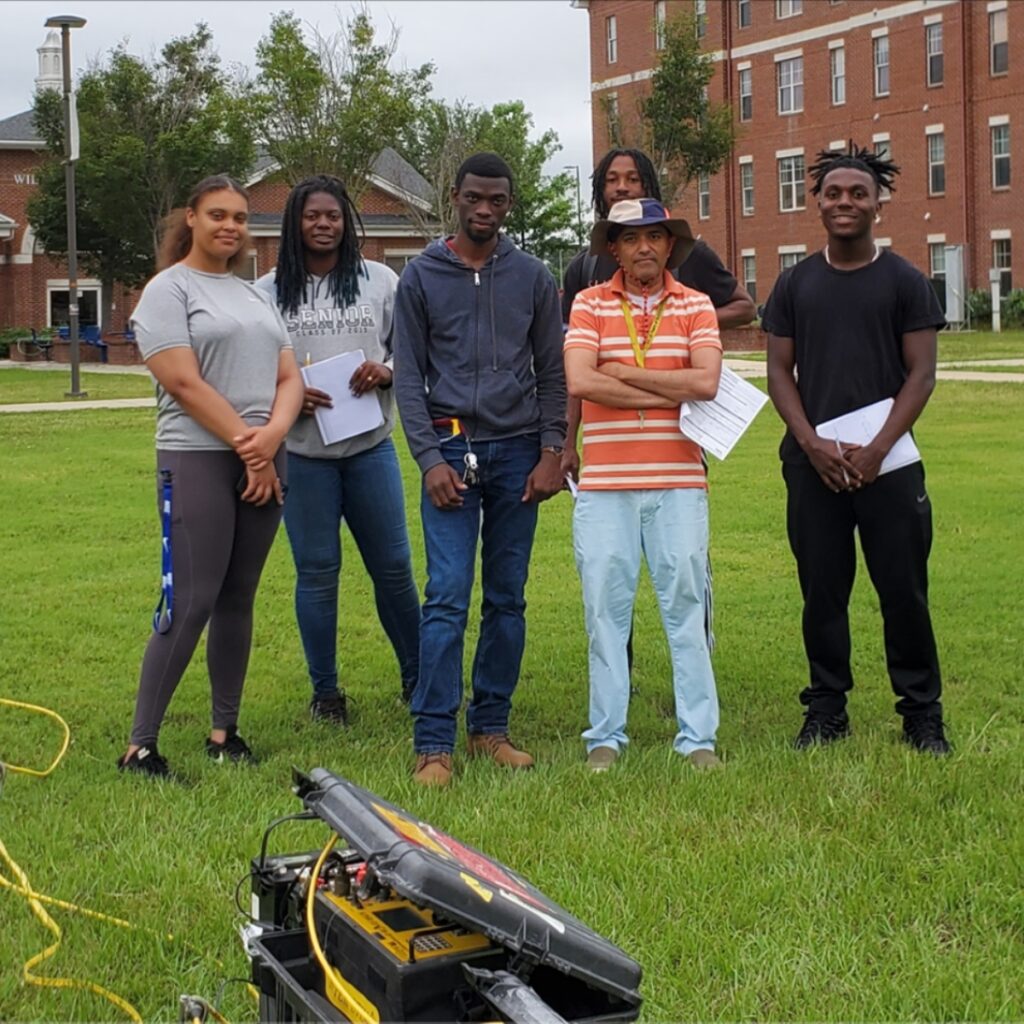
Building on that success, Dr. Kar launched GEOPaths, an NSF-funded summer traineeship and internship program designed to expand access to hands-on geoscience research. The program brings advanced geophysical tools directly to campus, including Ground Penetrating Radar (GPR) and electrical resistivity equipment provided through the EarthScope partnership.
Students learn how to image the subsurface, process real-world data, and write code in Python—skills that are increasingly essential in modern geoscience careers.
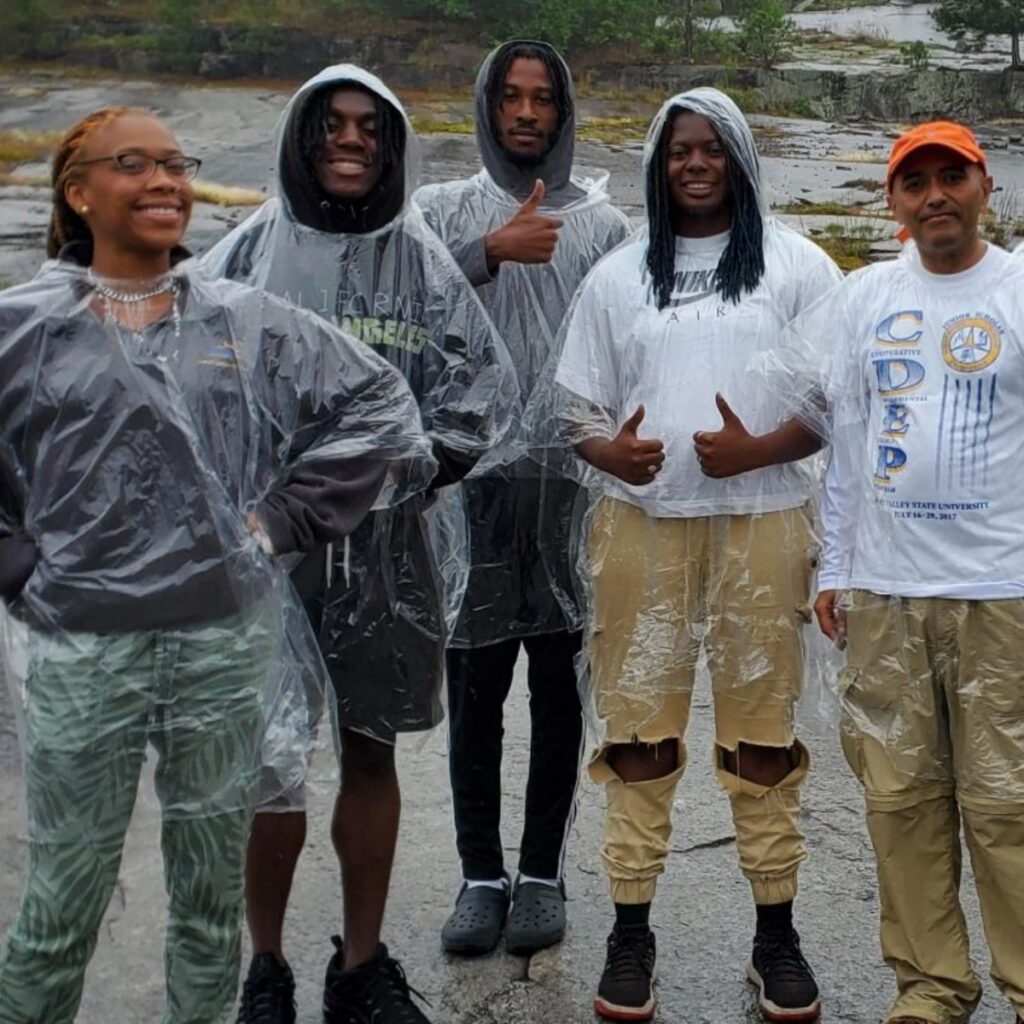
The program also emphasizes service learning. After participating in field research at Stone Mountain, GEOPaths interns return to campus to teach middle school summer campers how to identify rocks and minerals—reinforcing their own knowledge while inspiring the next generation of scientists.
The impact has been significant. Over the past five years, more than 1,600 predominantly African American students enrolled in FVSU chemistry laboratories have been introduced to geoscience concepts through peer-reviewed geophysics learning modules. For many, it represents their first exposure to the field.
Through its partnerships and training initiatives, FVSU and the Cooperative Developmental Energy Program have now graduated 52 geoscientists from underrepresented groups, and students can pursue a Minor in Geoscience alongside their primary degree.
In 2021, the first GEOPaths Summer Internship launched with four STEM majors. Since then, the program has expanded annually, giving students hands-on experience in geoscience foundations and field research while helping them continue their academic journeys in the discipline. Through our outreach fund, NABG was able to support students participating in the program last summer, many of which presented their research at our 44th Annual Technical Conference in Golden, Colorado.
Student Perspectives: Discovering a New Scientific Calling
For many students, GEOPaths becomes more than a research opportunity—it becomes a turning point in how they see science and their future.
William White, a previous GEOPaths student, highlights how the experience reshaped his academic trajectory.
“My favorite part of the GEOPaths research program was being able to work hands-on with scientific equipment,” he shared. “Collecting real data in the field and then processing it with EKKO software made the science feel interactive and meaningful.”
Before joining the program, geology was not even on his radar.
“I was focused on biology and health sciences, so geology felt like a separate world. The program completely changed that.”
Through hands-on training in technologies such as Ground Penetrating Radar, survey design, and data visualization, students develop both technical expertise and scientific confidence. In some cases, it is the first time students begin to see themselves as scientists.
Another past GEOPaths participant, Sharif Coker, recalls how the program opened an entirely new path.
“It was one of the first times I was exposed to geoscience in a meaningful way,” he said. “It helped me realize this was a field where I could make a difference.”
Sharif recently completed a master’s degree in geology and environmental earth studies focused on seismology. The confidence and experience he gained through GEOPaths helped guide him towards graduate study and his new career as a geoscientist at ExxonMobil.
For others, the program deepens their understanding of how geoscience molds the world around them.
Maurice Releford says the experience changed how he views the relationship between landscapes and communities.
“GEOPaths helped me see the vital connections between the environment and the
way people live. Learning about geology made me aware of how physical landscapes shape communities,” he explained.
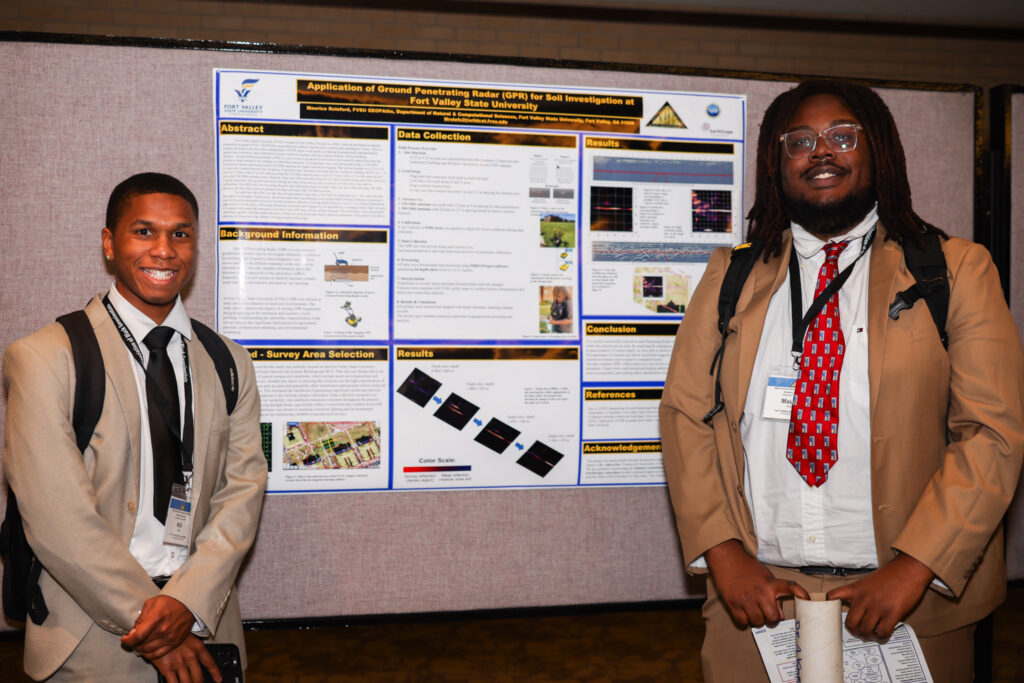
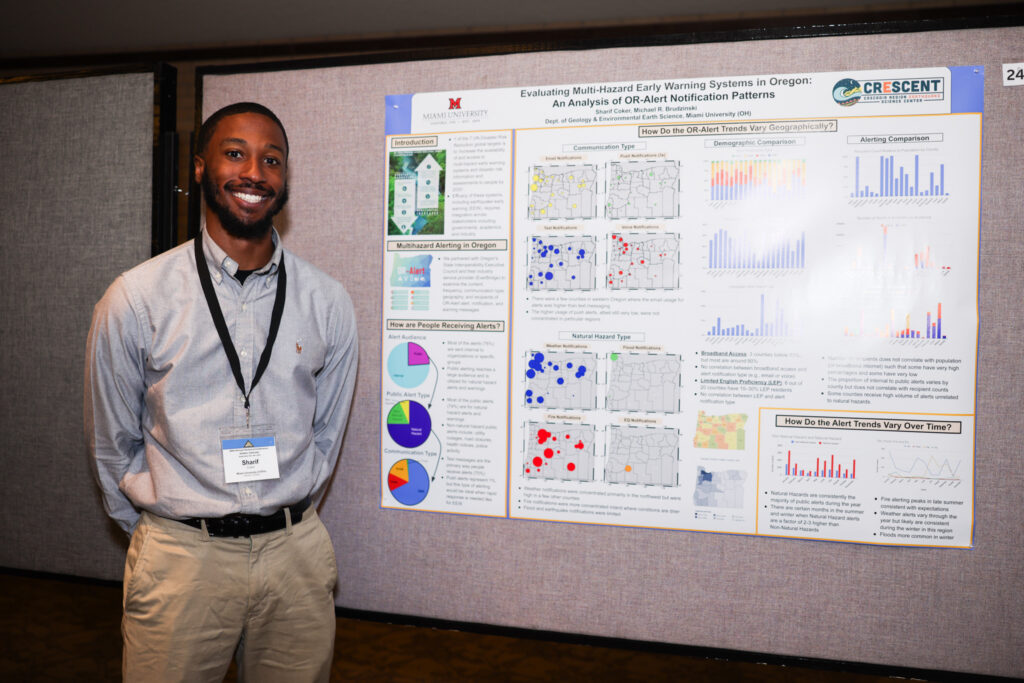
1: William White (l) and Maurice Releford (r), at William’s poster highlighting his GPR work @ NABG44. 2: Sharif Coker presenting his master’s research @ NABG44. All previously participated in GEOPaths.
Students also gain exposure to the wide range of careers available in the geosciences. Roger Pacquette, a senior at FVSU pursuing a bachelor’s degree in Liberal Arts with a minor in geology, credits GEOPaths with expanding both his technical abilities and professional outlook.
“I was exposed to Python programming and Ground Penetrating Radar (GPR) technology—industry-standard tools that have redefined my career path,” he said. “This program didn’t just give me academic knowledge; it inspired a global appreciation for environmental and geopolitical issues.”
Keiana Mazzio, FVSU alum and current master’s student at Miami University, credits GEOPaths with broadening her views and shifting the trajectory of her career journey. “I entered GEOPAths with no knowledge of geosciences and a major in an unrelated STEM field. Through this program, I realized that my chemistry background could be applied to solving Earth’s mysteries. I found a home in the geoscience community and decided to pursue it full-time.
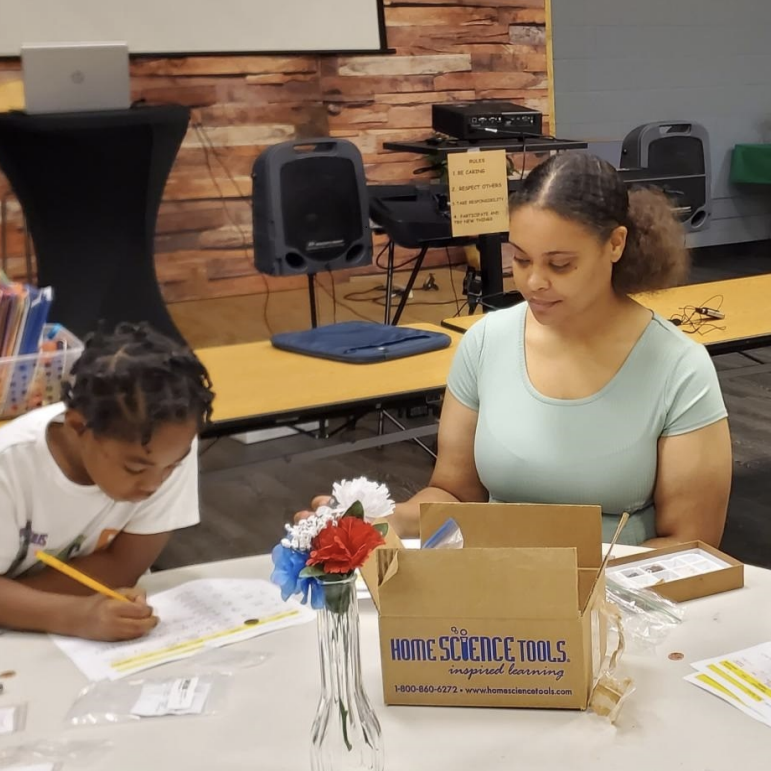
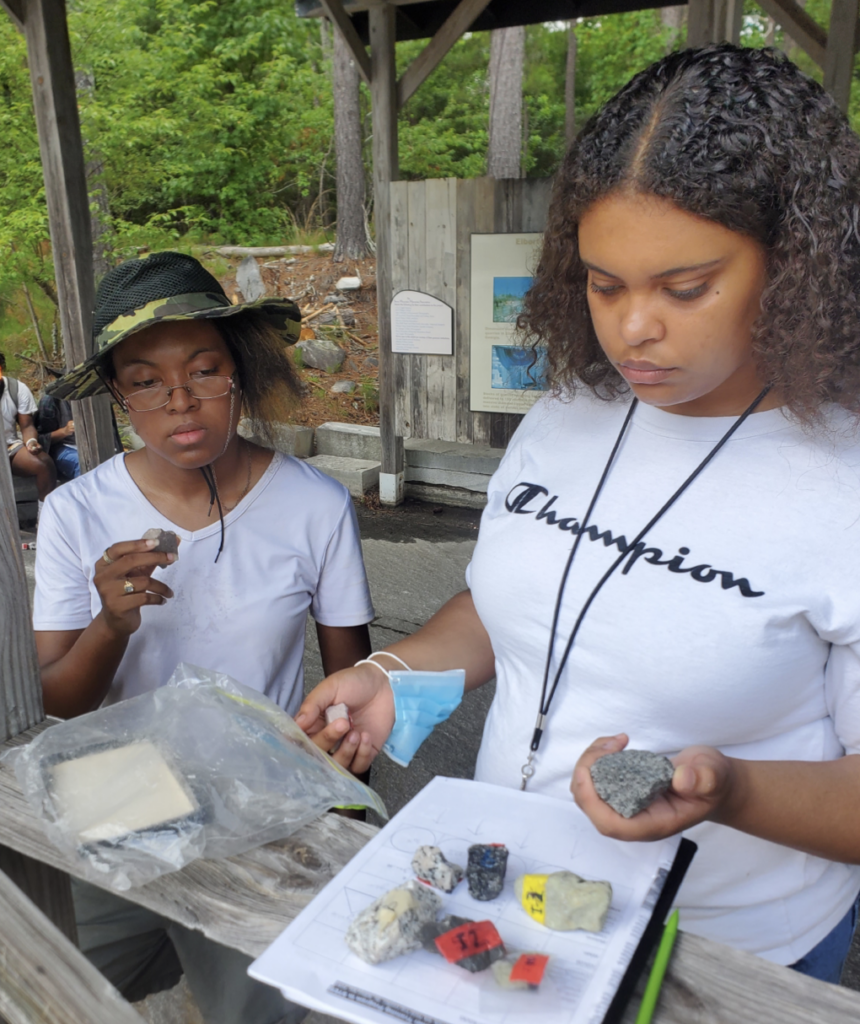
Keiana teaching students how to identify rocks and minerals.
Mentorship plays an equally important role in the program’s impact. Ariyanna Reedy, a senior chemistry major with a minor in geosciences at FVSU, describes GEOPaths as one of the most transformative experiences of her college career. The supportive environment and dedication of mentors made a lasting impression.
“The mentors in GEOPaths truly invest in helping students grow academically and personally,” she said. “The experience helped me strengthen my skills and better prepare for my future career.”
Students are also encouraged to share their work with the broader scientific community. William experienced that firsthand when he presented his research at NABG’s 44th Annual Technical Conference.
“Presenting my research to scientists from across the country pushed me outside my comfort zone,” he said. “Seeing how professionals responded to my work made me feel capable and validated as a young scientist.”
Today, William plans to pursue geology as his primary field of study with an interest in planetary geology.
His journey reflects the broader impact of GEOPaths: by providing exposure, mentorship, and hands-on research, the program opens doors to geoscience careers while empowering students to see how their work can shape communities and address real-world challenges.
Why GEOPaths Matters
Programs like GEOPaths are critical because they create access where little previously existed. Nationally, geoscience enrollment has declined in recent years, with even larger gaps for underrepresented students.
Without intentional outreach and mentorship, many talented students may never discover the opportunities available within the field.
GEOPaths addresses this challenge by introducing geoscience through interdisciplinary coursework, providing hands-on field research, and connecting students with experienced mentors. These experiences build both technical skills and professional confidence.
As William summarized:
“Programs like GEOPaths open doors for students who might never have considered or had access to geoscience research. They build confidence, develop technical skills, and help diversify fields like geology and geophysics.”
Equally important, the program fosters a sense of belonging. Presenting research, engaging with professional scientists, and seeing role models with similar backgrounds can transform how students view their place in the scientific community.
Looking Ahead
As global challenges grow more complex—from climate change and natural hazards to infrastructure resilience—the need for a diverse and well-prepared geoscience workforce has never been greater.
GEOPaths at Fort Valley State University demonstrates how strategic partnerships, institutional commitment, and student-centered mentorship can expand access to these careers.
For some students, the program sparks a completely new academic path. For many others, it provides their first introduction to geoscience. For the broader scientific community, it offers a scalable model for strengthening the future STEM workforce.
To ensure these opportunities remain available for future students, GEOPaths is seeking partners to help sustain and expand its impact.
Support for the GEOPaths Excellence Fund helps provide:
- Student stipends, allowing participants to focus on research rather than outside employment
- Field equipment and training on advanced geophysical tools such as Ground Penetrating Radar
- Graduate and professional development opportunities, including conference travel and networking
By investing in programs like GEOPaths, supporters help ensure that talented students can discover careers in geoscience and contribute to solving the environmental and societal challenges ahead.
To support the program, please consider a contribution through the FVSU Foundation, designated for GEOPaths, which can be selected from the “I want to Support” dropdown menu @ https://www.fvsu.edu/advancement/give-online.